Smart Manufacturing in the Automotive Industry: The Industry 4.0 Revolution
Driving the Next Era of Vehicle Production
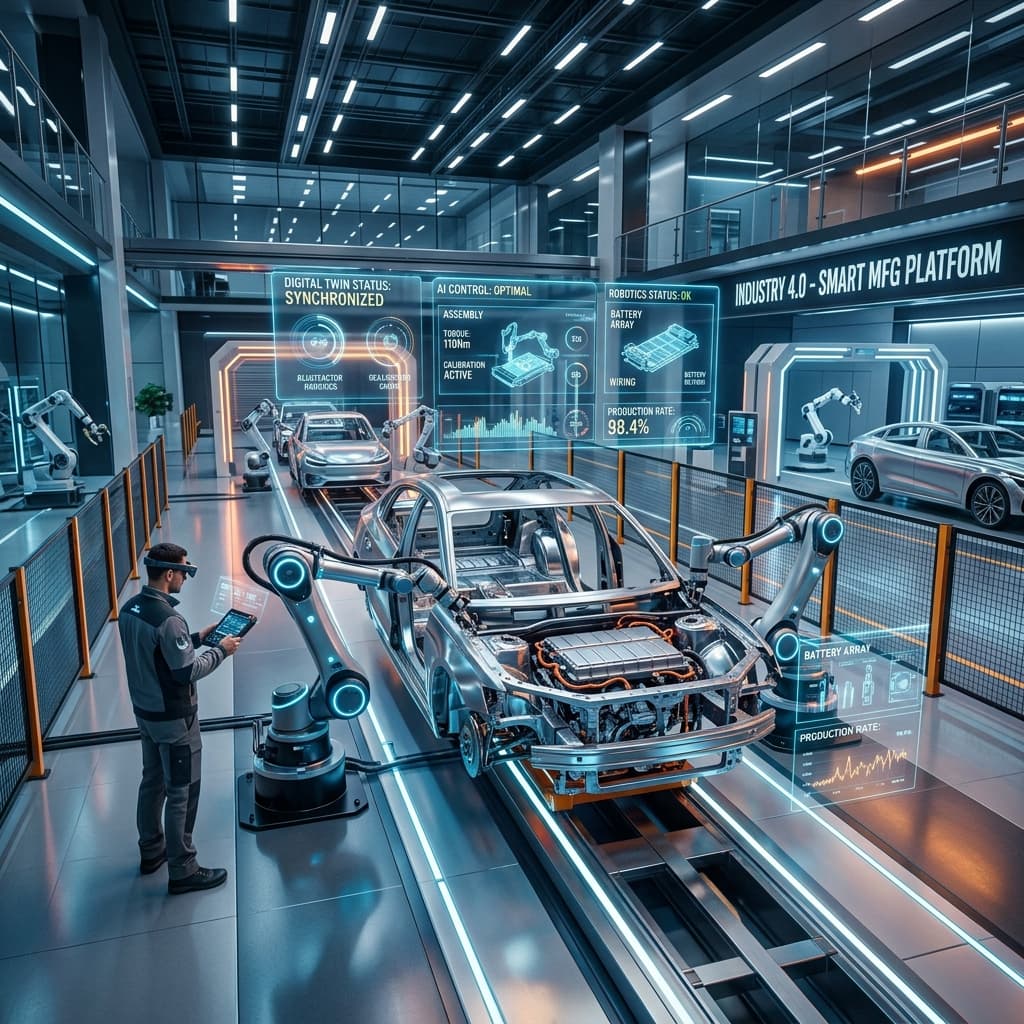
The automotive industry is undergoing a paradigm shift driven by Industry 4.0 technologies. Smart manufacturing, leveraging Artificial Intelligence, the Internet of Things (IoT), and robotics, is redefining how vehicles are designed, produced, and delivered to consumers. This digital transformation is enabling unprecedented flexibility, efficiency, and quality control.
The Role of IoT and Digital Twins
In a modern automotive plant, every machine, robot, and conveyor belt is interconnected via IoT sensors. This connectivity allows for the creation of "Digital Twins"—virtual replicas of the physical manufacturing environment. By simulating production processes in real-time, manufacturers can identify bottlenecks, test new configurations, and optimize workflows without disrupting actual production.
AI-Powered Quality Assurance
Quality control has traditionally been a manual, time-consuming process prone to human error. Today, AI-powered computer vision systems inspect vehicles with microscopic precision on the assembly line. These systems can instantly detect paint defects, misaligned panels, or faulty welds that human eyes might miss, ensuring that only flawless vehicles reach the showroom floor.
- Zero-Defect Manufacturing: AI drastically reduces the margin of error in automotive assembly.
- Adaptive Robotics: Collaborative robots (cobots) work alongside human operators, dynamically adjusting their actions based on real-time data.
- Supply Chain Optimization: Predictive algorithms forecast parts demand, preventing assembly line halts due to inventory shortages.
"The cars of tomorrow require the factories of tomorrow. Smart manufacturing is the engine powering the electric and autonomous vehicle revolution." - Betopia Group Automotive Experts
Conclusion
As consumer demand shifts towards electric and customized vehicles, the flexibility offered by smart manufacturing is critical. The automotive industry is no longer just about heavy machinery; it is a highly advanced technology sector where data is just as important as steel.